.png)
 Tiếng Việt
 English


Gold prices climbed to their highest level in nearly three weeks as investors bet on a December rate cut by the Federal Reserve and welcomed signs that the U.S. government shutdown may soon be over — reigniting optimism across global markets.
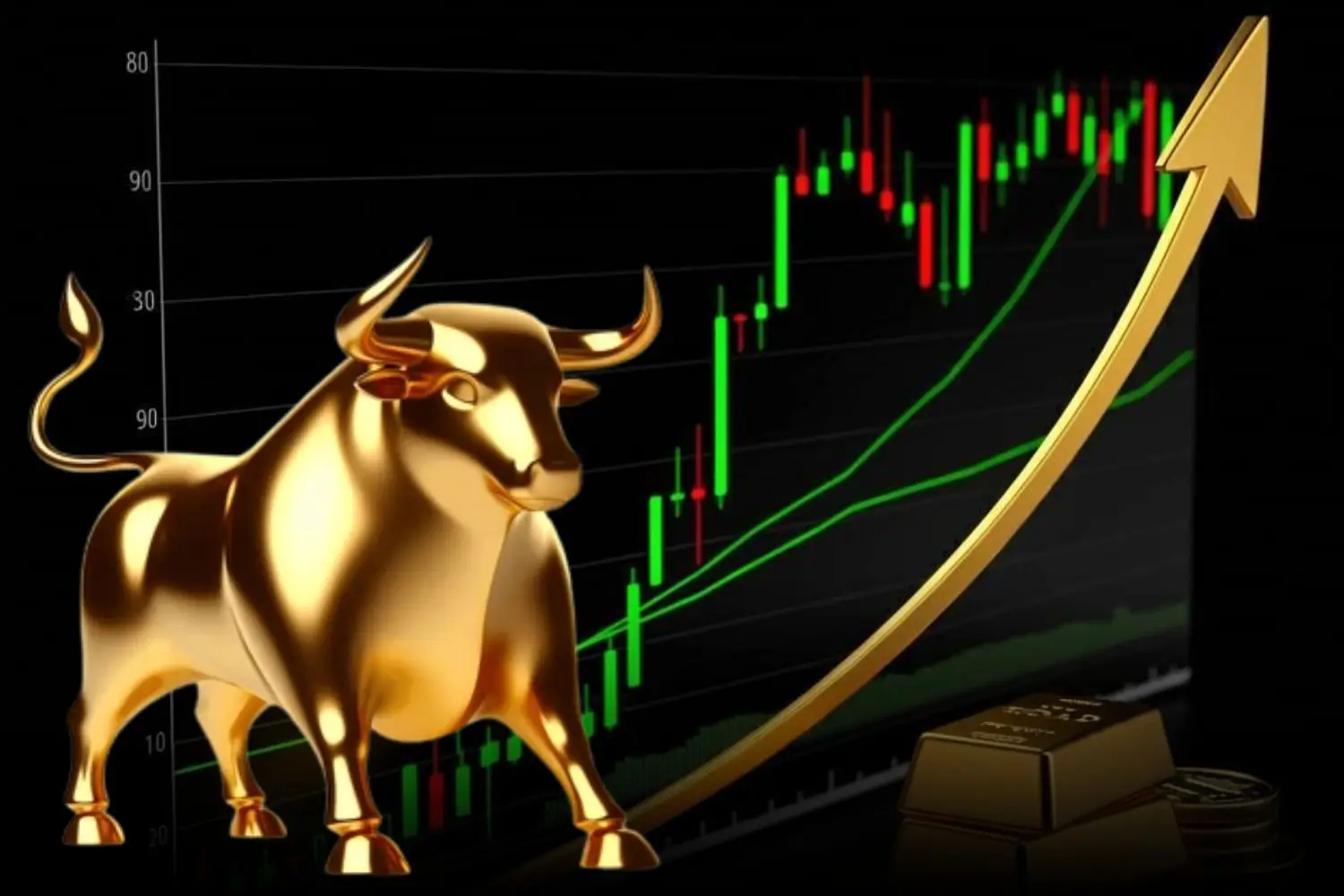
On November 11, 2025, gold prices advanced for a third consecutive week, reaching their highest level in nearly three weeks as traders priced in growing odds of a Fed rate cut in December and cheered signs that Washington’s record-long government shutdown could soon end.
Spot gold rose 0.7% to $2,142.72 per ounce as of 04:58 GMT, while December gold futures gained 0.7% to $2,148.80 per ounce — marking gold’s longest winning streak since the summer.
The rally was fueled by optimism after the U.S. Senate passed a funding bill late Monday that would reopen shuttered federal agencies. The development lifted investor confidence and helped remove one of the major sources of uncertainty that had paralyzed financial markets for weeks.
Analysts said the prospect of a government reopening brought a psychological boost that went beyond politics.
After weeks of policy paralysis, investors now appear ready to refocus on the bigger picture — monetary policy, economic growth, and the role of gold as a hedge against uncertainty.
“The idea that the shutdown is ending was met as lifting a level of uncertainty that gave markets permission to reengage with one of the main speculative narratives this year,”
— said Ilya Spivak, Head of Global Macro at Tastylive.
Spivak noted that the bias for the remainder of the year remains to the upside, with gold likely to retest October’s highs around $2,160 per ounce, and potentially break higher if the Fed signals a clear easing path.
According to the CME FedWatch Tool, traders now assign a 64% probability of a 25-basis-point rate cut in December.
Meanwhile, Fed Governor Stephen Miran suggested that a larger 50-basis-point cut could be justified, citing easing inflation and rising unemployment.
Recent data appears to support that view:
Job growth slowed sharply in October, with losses concentrated in government and retail sectors.
Consumer sentiment fell to a three-and-a-half-year low, reflecting growing concern about incomes and job security.
These indicators reinforce the perception that the U.S. economy is cooling, making it increasingly difficult for the Fed to sustain restrictive interest rates without risking a broader slowdown.
The prolonged shutdown delayed several critical reports — including the non-farm payrolls and personal consumption expenditure (PCE) data.
Once the government resumes operations, these numbers will be released, providing a clearer picture of economic momentum and shaping the Fed’s December policy decision.
Economists believe that if the data confirms a slowdown, the Fed will have little choice but to act to prevent a deeper contraction.
In such an environment, gold — which thrives when real yields fall — remains one of the most attractive defensive assets in the market.
From a technical perspective, gold remains in a firm uptrend, supported by strong buying interest around $2,110–$2,120 per ounce.
Analysts highlight resistance at $2,150–$2,160, with potential for a breakout toward $2,180–$2,200 if sentiment continues to improve and Fed rhetoric stays dovish.
At the same time, the U.S. dollar index has weakened as investors rotate into safe-haven assets, further boosting gold’s appeal to international buyers.
Exchange-traded funds such as SPDR Gold Trust also recorded net inflows for the first time in over two months, signaling a shift back toward precious metals exposure among institutional investors.
Gold’s rally was mirrored across the broader precious metals complex:
Silver gained 0.8% to $25.94 per ounce,
Platinum rose 0.4% to $984.40,
Palladium advanced 1.4% to $1,235.43.
The synchronized rise underscores a broader reallocation into tangible assets, as investors look to diversify away from volatile equities and currencies amid uncertain global growth.
As rate-cut bets rise, the U.S. dollar has eased against major peers, making gold cheaper for non-dollar holders.
Falling Treasury yields have also strengthened the metal’s case as investors seek shelter from potential policy missteps and geopolitical tensions.
Meanwhile, concerns over U.S.–China trade frictions, Europe’s energy outlook, and China’s sluggish recovery continue to fuel demand for gold as a global hedge against macro instability.
Many analysts call this combination of factors “a perfect setup” for gold to continue its upward trajectory into year-end, especially as portfolio managers rebalance holdings in favor of defensive assets.
As 2025 draws to a close, the macroeconomic landscape appears increasingly supportive of gold.
With inflation trending lower, unemployment edging higher, and growth softening, both policymakers and investors are shifting toward a defensive posture.
If the Fed indeed cuts rates in December, gold could break above the $2,200 mark, its highest level of the year.
Still, analysts caution that short-term volatility may rise once the backlog of U.S. economic data is released after the shutdown.
Ultimately, gold’s resurgence reflects more than just optimism — it represents a strategic rebalancing by investors seeking long-term value preservation in a world still defined by uncertainty.
1. Why are gold prices rising in November 2025?
Because investors expect the Federal Reserve to cut rates in December, while optimism grows over the likely end of the U.S. government shutdown.
2. How do interest rate cuts impact gold?
Lower interest rates reduce the opportunity cost of holding non-yielding assets like gold, boosting demand among investors.
3. What is the next target level for gold?
Analysts see resistance near $2,160–$2,180 per ounce. A sustained breakout above that range could open the door to $2,200 and higher.
4. What could slow gold’s momentum?
Stronger-than-expected U.S. economic data or a more hawkish Fed stance could lift the dollar and temporarily cap gold’s advance.